
Cattle tagging: NLIS ear tags, which ear, and the rules in Australia, the UK and US
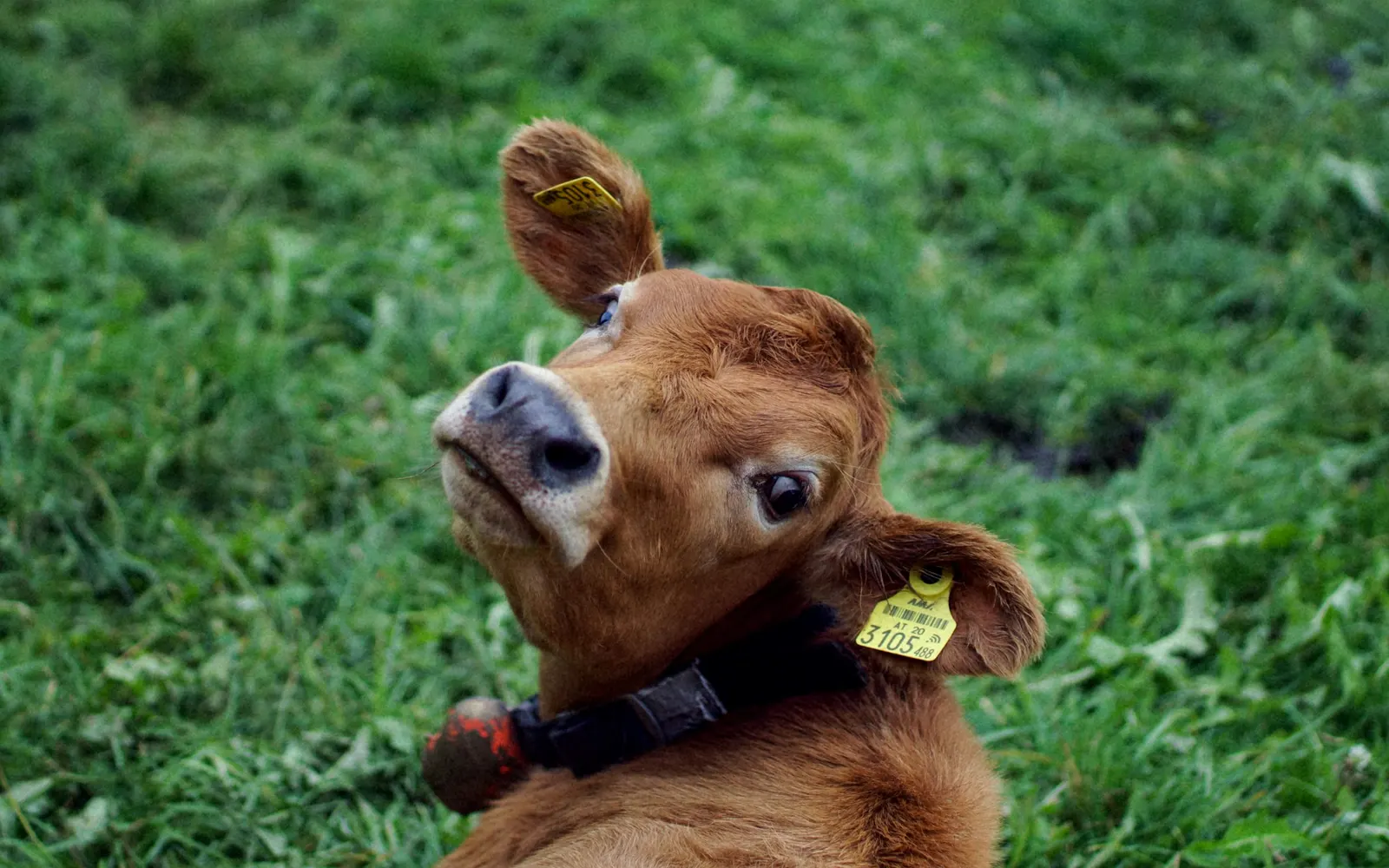
In Australia, cattle must carry an NLIS-approved electronic device before they leave a property, and cattle tags go in the right ear: white for breeder tags, orange for post-breeder tags (ISC n.d.a). In England and Wales each calf needs two official ear tags, a yellow primary tag in either ear and a secondary tag in the other (BCMS and RPA 2022a). In the United States, official eartags sold for or applied to cattle since November 5, 2024 must be readable both visually and electronically (USDA APHIS 2024).
What is cattle tagging and why does it matter?
Cattle tagging means fixing an official identity device, usually an ear tag, to each animal. The tag carries a number that is linked to the property where the animal was tagged. When cattle move, that number lets officials follow them if a disease, food safety or chemical residue problem turns up (ISC n.d.a).
Some tags are electronic. An RFID (radio frequency identification) tag holds a microchip with a number that is read with a wand or panel reader, and NLIS tags also carry a number printed on the outside that you can read by eye (ISC n.d.a).
Tag numbers are also the backbone of your own herd book. Our guide to livestock record keeping covers what to record against each tag.
How does NLIS cattle tagging work in Australia?
The National Livestock Identification System (NLIS) is "Australia's system for identifying and tracing livestock", run by Integrity Systems Company (ISC). "All animals leaving a property (PIC) must be identified with an NLIS-approved device before they move", unless a specific exemption applies or your state or territory issues a permit (ISC n.d.a).
For cattle, the device is electronic: either a single RFID ear tag, or a rumen bolus (a capsule that sits in the stomach) plus a visual ear tag (ISC n.d.a). In Victoria, all cattle, regardless of age, must have an electronic NLIS (Cattle) tag before leaving a property (Agriculture Victoria 2026).
Getting tags
- You need a Property Identification Code (PIC) from your state or territory department of agriculture before you can order devices (ISC n.d.a).
- In Queensland you get authorisation from the department first; in Victoria you order through Agriculture Victoria; elsewhere you buy from resellers, rural retailers or agencies (ISC n.d.a).
- The manufacturer loads each tag's numbers onto your PIC in the NLIS database before posting them to you. You do not need to notify NLIS when you tag an animal (ISC n.d.a).
- Approved devices carry the NLIS logo, and cattle devices have "Do not remove" printed on the male button (ISC n.d.a).
Reading the numbers
Each electronic device has two numbers. The NLISID is printed on the outside, and its first eight characters are the PIC the tag was issued to. The RFID number is on the chip and is read with a scanner. Either can be used to record a movement (ISC n.d.a). If you have no reader, ISC suggests hiring or borrowing one from your agent (ISC n.d.a).
What is the difference between breeder and post-breeder tags?
| Device | Colour for cattle | When it is used |
|---|---|---|
| Breeder device | White | The first device, applied on the property of birth before the animal moves for the first time |
| Post-breeder device | Orange | Applied after the animal has left its property of birth, for example when the original tag is lost or fails, or for introduced cattle not already identified |
The colour tells buyers where an animal was born. Agriculture Victoria warns that using the wrong tag "will falsely indicate the breeding and life history of an animal" (Agriculture Victoria 2026). Sheep and goats use a different colour scheme; see sheep ear tag colours.
Which ear does a cattle tag go in?
In Australia, the right ear. ISC says "cattle tags go in the right ear; sheep tags usually go in the left ear" (ISC n.d.a). Agriculture Victoria states that NLIS breeder and post-breeder tags "must be attached to an animal's right (offside) ear", and its tagging video shows the tag in the middle of the ear, not at the tip, top or bottom (Agriculture Victoria 2026). Only one electronic NLIS tag may be on an animal at a time in Victoria (Agriculture Victoria 2026).
New Zealand also uses the right ear. OSPRI, which runs the NAIT (National Animal Identification and Tracing) scheme, says tags go in the right ear because meat processors and saleyards usually set up their scanners to read from the right side, and in "the central or inner part of the ear between the 2 veins" (OSPRI n.d.).
In the UK the yellow primary tag "can go in either ear", with the secondary tag in the other ear (BCMS and RPA 2022a). In the US, USDA's summary for "840" tags says "either ear application", while orange brucellosis vaccination tags are recommended for the right ear only (USDA APHIS 2025).
| Country | Which ear | Main device | When to tag |
|---|---|---|---|
| Australia | Right | One NLIS RFID tag (white breeder, orange post-breeder) | Before leaving the property (ISC n.d.a) |
| England and Wales | Primary in either ear, secondary in the other | Two official tags with the same number | Beef calves before 21 days; dairy primary tag within 36 hours (BCMS and RPA 2022a) |
| United States | Either ear for 840 tags | Official eartag, visual and electronic since 5 November 2024 | Before interstate movement, for cattle that need official ID (USDA APHIS 2024) |
| New Zealand | Right | NAIT-approved RFID tag (white for cattle) | Within 180 days of birth or before first off-farm move (OSPRI n.d.) |
What happens if a cow loses its NLIS tag?
Once applied, an NLIS device stays with the animal for life, and "it is an offence to remove an NLIS device from an animal and apply another" (ISC n.d.a). If a tag is lost (ISC n.d.b):
- On the property of birth: apply another white breeder tag. The animal keeps its lifetime traceability.
- After it has left the property of birth: apply an orange post-breeder tag. If you know the old tag number, link it to the new one in the NLIS database and the animal keeps its lifetime traceability. If not, the history is lost.
Lifetime traceability matters for sale: ISC notes that markets like China and the EU require it (ISC n.d.b). If an animal has wandered rather than lost a tag, see how to find lost cattle.
What are the cattle tagging rules in the UK?
These rules are for England and Wales; Scotland and Northern Ireland have different rules (BCMS, RPA and APHA 2024). All cattle must have official ear tags, bought from an approved supplier. For cattle born in England and Wales or imported from outside the EU, the tags must show the crown logo, the country code UK, your herd mark and a 6-digit official ear tag number (BCMS and RPA 2022b).
- Two tags per calf. The primary tag must be a yellow flag tag. The secondary tag can be a different size, style or material but must carry the same official identity information (BCMS and RPA 2022a).
- Deadlines. Beef calves: both tags before 21 days old. Dairy calves: primary tag before 36 hours old and secondary before 21 days. Bison: when separated from their dams or before 9 months old, whichever is sooner (BCMS and RPA 2022a).
- Fitting. The male part of a plastic tag should enter from the back of the ear, with the female part on the inside; check the ear after about 10 days for damage or infection (BCMS and RPA 2022a).
- Replacing. Order and fit replacement tags within 28 days of noticing loss or damage. You cannot move animals off your holding without official ear tags, and you must not reuse tags or numbers (BCMS and RPA 2022b).
Each animal keeps the same official number for life, with exceptions for animals born or imported before 1998 and some imports (BCMS and RPA 2022b).
What are the cattle tagging rules in the US?
US federal rules cover cattle that cross state lines. The cattle that must be officially identified before interstate movement are sexually intact cattle and bison 18 months of age or over, all dairy cattle, and cattle of any age used for rodeo, recreation, shows or exhibitions (USDA APHIS 2024). Registered brands and breed registry tattoos can also count as official ID when the shipping and receiving states agree (USDA APHIS 2024).
- Since November 5, 2024, official eartags sold for or applied to cattle and bison must be readable visually and electronically (USDA APHIS 2024). Visual-only tags count only if applied before that date (USDA APHIS 2025).
- An "840" tag carries a 15-digit animal identification number starting with 840, the numeric code for the USA (USDA APHIS 2025).
- Official eartags applied since March 11, 2015 must bear the official eartag shield, a US Route Shield graphic (USDA APHIS 2025).
- In general no more than one official eartag may be applied to an animal, with listed exceptions (USDA APHIS 2024).
APHIS says it "provides electronic ID tags to cattle producers at no cost through State Veterinarian offices", and suggests checking with your State Veterinarian about availability (USDA APHIS n.d.).
Where can you check the current rules?
Tagging rules change, and states and territories add their own. Before you buy tags or move stock, check with your state or national authority: your state department of agriculture or ISC in Australia, the British Cattle Movement Service in England and Wales, your State Veterinarian in the US, or OSPRI in New Zealand. This article reports what those bodies publish; it is not legal advice for your own herd.
Common questions
Which ear does a cattle tag go in?
In Australia, NLIS cattle tags go in the right ear, which Agriculture Victoria calls the offside ear, in the middle of the ear. New Zealand's NAIT tags also go in the right ear. In England and Wales the yellow primary tag can go in either ear, with the secondary tag in the other. US 840 tags can go in either ear.
What colour is an NLIS breeder tag for cattle?
White. A white breeder tag is the first device, put on at the property of birth before the animal moves for the first time. An orange post-breeder tag is used after the animal has left its property of birth, for example when the original tag is lost or fails. Using the wrong colour gives a false picture of where the animal was bred.
What are the cattle tagging rules in the UK?
In England and Wales every calf needs two official ear tags with the crown logo, UK code, herd mark and a 6-digit number. Beef calves need both tags before 21 days old. Dairy calves need the primary tag within 36 hours and the secondary within 21 days. Lost or damaged tags must be replaced within 28 days. Scotland and Northern Ireland have different rules.
Do cattle need EID tags in the US?
For cattle that must be officially identified to cross state lines, yes. Since November 5, 2024, official eartags sold for or applied to cattle and bison must be readable both visually and electronically. This applies to sexually intact cattle 18 months or older, dairy cattle, and rodeo or show cattle. APHIS says free EID tags are available through State Veterinarian offices.
What happens if a cow loses its NLIS tag?
If it is still on its property of birth, put in another white breeder tag. If it has left, put in an orange post-breeder tag and, if you know the old tag number, link the two in the NLIS database so the animal keeps its lifetime traceability. Without the old number, that history is lost. It is an offence to remove an NLIS device from an animal and apply another.
References
- Agriculture Victoria (2026) 'Owning, keeping and moving cattle', Agriculture Victoria. Available at: https://agriculture.vic.gov.au/livestock-and-animals/national-livestock-identification-system/nlis-cattle (Accessed: 17 October 2026).
- BCMS and RPA (2022a) 'What to do after a calf is born', British Cattle Movement Service and Rural Payments Agency, GOV.UK. Available at: https://www.gov.uk/guidance/what-to-do-after-a-calf-is-born (Accessed: 17 October 2026).
- BCMS and RPA (2022b) 'Get new or replacement official ear tags for cattle', British Cattle Movement Service and Rural Payments Agency, GOV.UK. Available at: https://www.gov.uk/guidance/get-new-or-replacement-official-ear-tags-for-cattle (Accessed: 17 October 2026).
- BCMS, RPA and APHA (2024) 'Keeping cattle, bison and buffalo in England and Wales', British Cattle Movement Service, Rural Payments Agency and Animal and Plant Health Agency, GOV.UK. Available at: https://www.gov.uk/government/collections/keeping-cattle-bison-and-buffalo-in-england-and-wales (Accessed: 17 October 2026).
- ISC (n.d.a) 'Animal identification', Integrity Systems Company. Available at: https://www.integritysystems.com.au/identification--traceability/animal-identification/ (Accessed: 17 October 2026).
- ISC (n.d.b) 'Buying, selling and moving livestock', Integrity Systems Company. Available at: https://www.integritysystems.com.au/identification--traceability/buying-selling-moving/ (Accessed: 17 October 2026).
- OSPRI (n.d.) 'Your tagging responsibilities', OSPRI New Zealand. Available at: https://www.ospri.co.nz/farmers-and-livestock-owners/tagging-and-registering-animals/tagging-your-animals/about-tags-and-tagging (Accessed: 17 October 2026).
- USDA APHIS (2024) '9 CFR Part 86: Animal disease traceability', Code of Federal Regulations, as amended 89 FR 39564, 9 May 2024. Available at: https://www.ecfr.gov/current/title-9/chapter-I/subchapter-C/part-86 (Accessed: 17 October 2026).
- USDA APHIS (2025) 'Official eartags: general criteria and options', United States Department of Agriculture, Animal and Plant Health Inspection Service, 31 January 2025. Available at: https://www.aphis.usda.gov/sites/default/files/adt-eartags-criteria.pdf (Accessed: 17 October 2026).
- USDA APHIS (n.d.) 'Animal disease traceability', United States Department of Agriculture, Animal and Plant Health Inspection Service. Available at: https://www.aphis.usda.gov/livestock-poultry-disease/traceability (Accessed: 17 October 2026).