
How to find lost cattle: what to check first, who to call, and how to spot losses early
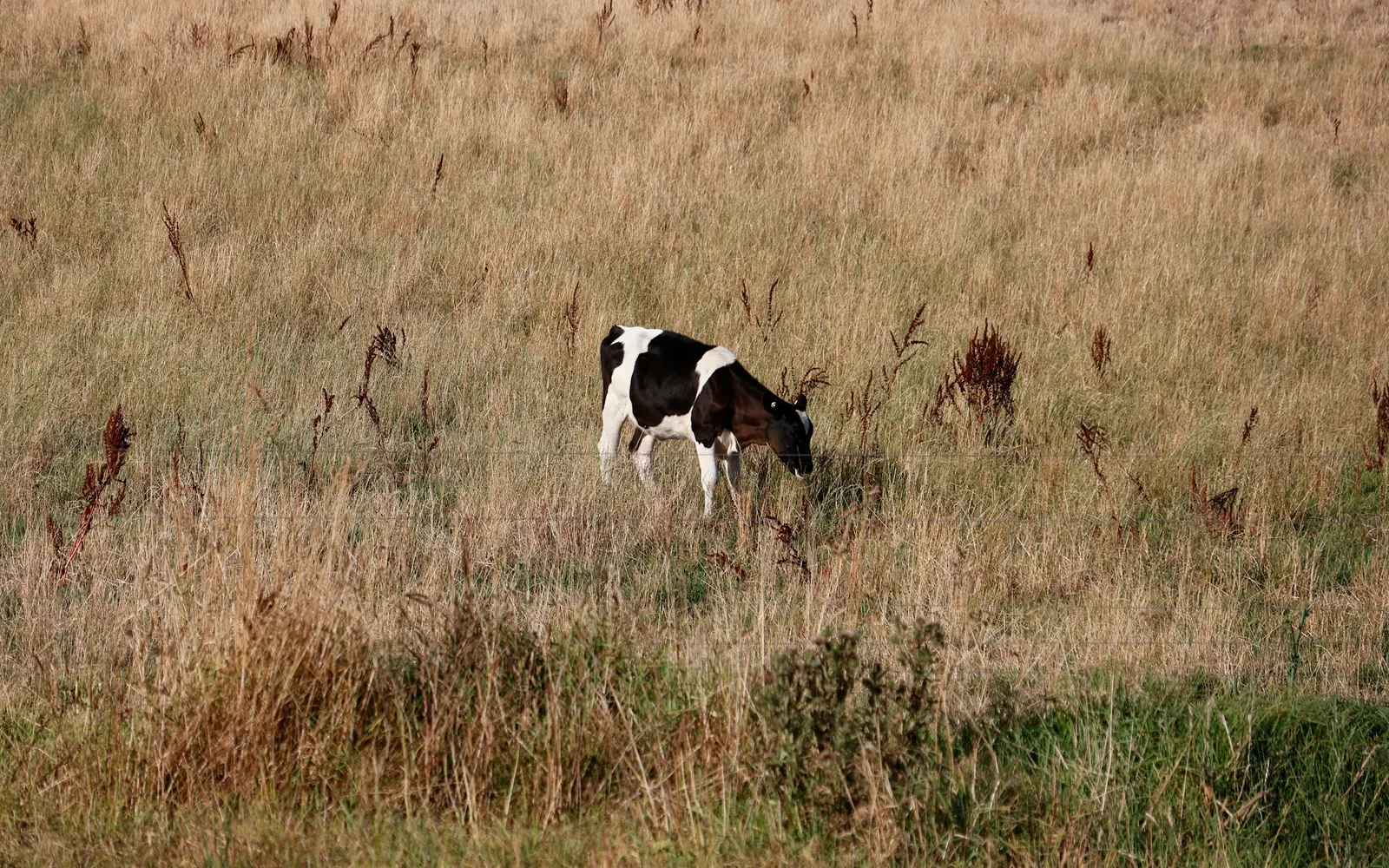
To find lost cattle, start where they were last seen and work outwards: check fences and gates, then water, then your neighbours' mobs. Cattle are herd animals with "a strong innate motivation for continuous social contact" (Gavojdian et al. 2024), and in Western Australia's rangelands cattle normally graze within 5 km (about 3 miles) of a watering point (DPIRD WA 2025). If they are on a road, call the council or Local Land Services in NSW, or police if you cannot reach them (NSW Police n.d.b). If you suspect theft, report it to police straight away (South Dakota Brand Board 2025).
What should you check first when cattle go missing?
Work through these in order. Each step is quick, and most of them rule something out before you spend a day driving the district.
- Count again. Before you search, make sure the mob really is short. Recount the same way you counted last time. Our guide on how to count cattle covers gate counts, race counts and tallies.
- Go to where they were last seen. Note the date and the paddock. Police will ask for both if it turns into a theft report (NSW Police 2018).
- Walk the fences and gates. A broken fence, a threat from a predator or other animal, or a lack of food or water are common reasons stock leave. A fence does not even need to be fully broken: young calves can slip through one that looks fine (Stewart 2020).
- Check water. Troughs, dams and creeks, including on the other side of the boundary.
- Look at your neighbours' cattle. A missing animal on its own will often be drawn to other cattle (see the next section).
- Check roads, the council pound and local saleyards, then call the people listed in the table below.
Where do lost cattle usually go?
Towards other cattle
Cattle are "highly gregarious", meaning they strongly prefer company. Being cut off from other cattle raises their heart rate and stress hormone (cortisol) levels and makes them call more (Gavojdian et al. 2024). The same research describes cows using open-mouth, high-frequency calls for "long-distance communication" (Gavojdian et al. 2024). So it makes sense to check any mob a stray could see, hear or smell, and to stop and listen for calling as you search.
Towards water
Western Australia's agriculture department says cattle normally graze "within a radius of 5 km" of a watering point, and that stock needing more water, because of climate, lactation, salty water or dry feed, may drink more than once a day, which shrinks the area they use (DPIRD WA 2025). That figure comes from big rangeland paddocks, so treat it as a rough search radius, not a rule. In smaller paddocks, start with the nearest troughs and dams.
Wherever a flood or fire pushed them
After a natural disaster such as a flood, stray cattle may turn up on other properties, and their tags, brands or earmarks are how the owner is traced. Business Queensland says it can use the 16-digit NLIS number to search the national database for "the last known registered property", although privacy rules mean the person who finds them cannot see that information directly; a Biosecurity Queensland officer makes contact instead (Business Queensland 2025).
How do you get lost cattle home safely?
Ontario's agriculture ministry says most escaped livestock "are quickly contained by responsible owners", and that recapture is usually best left to experienced people. In some cases animals have to be caught "in a secure corral or pen in their own time, using feed, water and herdmate cues", which it calls more humane, controlled and effective than fear-based methods such as driving them (Wand 2021).
Safety comes first. University of Georgia Extension points out that adult beef cattle "can weigh upwards of 1000 lbs" (about 450 kg, our arithmetic), that they are prey animals with flight or fight instincts, and that a frightened animal is likely to run, sometimes into a road (Stewart 2020). If a vehicle could hit them, call police or the local authority before you try anything else.
Putting the Ontario advice into practice means setting up a yard or pen first, then using feed, water and a few of the stray's own herd mates to draw it in, rather than chasing it. If the animal is on someone else's land, ask before you go in.
Who should you call about missing cattle?
The right contact depends on where you are and whether the animals are on a road, in a pound or possibly stolen.
| Where | Situation | Who to contact | Source |
|---|---|---|---|
| NSW, Australia | Stock on a public road | Local council or Local Land Services first; local police if you cannot reach them | NSW Police n.d.b |
| NSW, Australia | Suspected stock theft | Local police and Rural Crime Investigators; Crime Stoppers 1800 333 000 | NSW Police n.d.a |
| Victoria, Australia | Livestock theft | Triple Zero (000) if it is happening now; otherwise online reporting or the Police Assistance Line 131 444 | Victoria Police 2025 |
| Queensland, Australia | Stray stock found after a disaster | Biosecurity Queensland, with the NLIS number, brand or earmark | Business Queensland 2025 |
| England and Wales | Lost or stolen cattle | Police and BCMS; post the passport to BCMS within 7 days | BCMS and RPA 2022 |
| Ontario, Canada | Escaped livestock | Police if there is danger; then the owner, municipal animal control, or OMAFRA on 1-877-424-1300 | Wand 2021 |
| South Dakota, US | Believed stolen | Local law enforcement immediately | South Dakota Brand Board 2025 |
In the United States, a stray seen by the public usually goes to the county sheriff first. A University of Georgia Extension agent in Lincoln County, Georgia, advises people who see a loose animal to call the sheriff's office, which may already know who owns it, and says the county extension office may also know (Stewart 2020).
Could your cattle be in a pound or a saleyard?
Yes. Stray stock picked up from roads can be impounded. In one NSW shire, impounded straying stock are held until the owner claims them and pays the council's costs, and if nobody claims them, "the stock are sold at a public auction" (Narromine Shire Council n.d.).
Saleyards matter too. In western South Dakota, brand inspectors check ownership of livestock at livestock markets and pick up strays during inspections. In 2024 they inspected 1,615,013 head and recovered "approximately $1.2 million" worth of stray livestock. When a seller cannot prove ownership, the sale money is held until they can (South Dakota Brand Board 2025). Clear identification is what links a stray back to its owner: see our guide to cattle ear tags and NLIS.
It also pays to know your neighbours before anything goes wrong. Ontario's guidance says livestock owners should swap contact details with neighbours so escapes can be reported quickly (Wand 2021), and South Australia Police suggest giving neighbours a copy of your brand "for quick and easy identification" (SAPOL n.d.).
Lost or stolen: how can you tell?
Often you cannot tell at first. In South Dakota, 610 head of livestock (278 cows, 177 calves, 90 yearlings, 13 bulls and 52 horses) were reported missing or stolen in 2024, down from 1,166 head in 2023, and 241 head were recorded as found or recovered in 2024. The Brand Board notes that some animals reported missing "may be the result of a civil dispute between producers, lenders taking possession of their security, or livestock may have died" (South Dakota Brand Board 2025).
NSW Police's stock theft report form shows what investigators weigh up. It asks for the date stock were last counted and by whom, the number of deaths in the paddock, any health problems, and the weather or conditions at the time, such as flood, drought or fly (NSW Police 2018). If your search turns up a cut fence, tyre marks at a gate, or a whole group gone at once, report it as a possible theft and read our guide to livestock theft and stolen cattle.
How do regular head counts help you notice losses early?
The longer a loss goes unnoticed, the harder it is to fix. Researchers at the University of New England's Centre for Rural Criminology found that the size and remoteness of rural properties "often limit the regularity with which farmers check their livestock", and that the time it takes farmers to notice stolen livestock "can range from days to months". By then there is little evidence left for police (Mulrooney and Harkness 2022).
Police advice lines up with this. Victoria Police tells farmers to "count your livestock regularly", name or number paddocks, and keep records of which stock are where (Victoria Police 2025). The NSW Police stock theft form asks you to attach "copies of any records in relation to the counts" (NSW Police 2018). A dated count, written down, turns "I think a few are missing" into "there were 84 here on the 3rd and 79 today", which is what an investigator needs.
Photo counting is one way to make quick, dated counts in the paddock. Count My Herd, a phone app, counts cattle in a few paddock photos and gives a range around the count. In its makers' first check, 9 small groups of 1 to 7 head (one photo each) were all counted exactly; big mobs and multi-photo sweeps have not been tested yet, so it is an estimate, not a count through the race.
What records help if they never come home?
Keep a simple file for each loss: the date you noticed, the last count, the paddock, and the identification of every missing animal. NSW Police ask for NLIS and management tag numbers, a sketch of the brand or earmark and where it sits on the animal, whether the brand is registered, and any photos of the stock (NSW Police 2018).
In England and Wales you must also record the date of the loss or theft in your holding register. If the animal later turns up, you confirm this in writing with BCMS, update the register, and BCMS sends a replacement passport (BCMS and RPA 2022). Our guide to livestock record keeping covers what to record day to day so this information is ready when you need it.
Common questions
How do you find a lost cow?
Recount the mob to confirm it is short, then go to where the cow was last seen and work outwards. Walk the fences and gates, check troughs, dams and creeks, and look through neighbours' cattle, because cattle are herd animals with a strong drive for company. Then check roads, the council pound and local saleyards, and call the authorities for your area.
Where do lost cattle usually go?
Towards other cattle and towards water. Research describes cattle as highly gregarious, and isolation raises their heart rate, cortisol and calling. In Western Australia's rangelands, cattle normally graze within 5 km (about 3 miles) of a watering point. After a flood, strays found on other properties can be traced through their NLIS tag, brand or earmark.
Who do I call if my cattle are missing?
It depends on where you are. In NSW, stock on a public road go to the local council or Local Land Services first, then police. Suspected theft goes to police, or Crime Stoppers on 1800 333 000. In Victoria, call 000 if a theft is happening now, otherwise 131 444. In England and Wales, report lost cattle to police and BCMS. In South Dakota, call local law enforcement.
What do I do with a missing cattle passport in the UK?
In England and Wales, keepers must report lost or stolen cattle to the police and the British Cattle Movement Service, and post the animal's passport to BCMS so it arrives within 7 days of becoming aware of the loss. Record the date of the loss in your holding register. If the animal is found, confirm it in writing with BCMS, which sends a replacement passport.
How do I get a stray cow home without chasing it?
Ontario's agriculture ministry says escaped animals sometimes have to be caught in a secure yard or pen in their own time, using feed, water and herd mates, which it calls more humane and effective than driving them. Adult beef cattle can weigh over 1,000 lb (about 450 kg), so keep safe, and call police or the local authority if they are near a road.
How can I tell if missing cattle were stolen?
Often you cannot at first. In South Dakota, some livestock reported missing turn out to be civil disputes, repossessions or deaths. Police look at when stock were last counted, deaths in the paddock, health and weather. A cut fence, tyre marks at a gate or a whole group gone at once are reasons to report a possible theft to police straight away.
References
- BCMS and RPA (2022) 'Report lost or stolen cattle', GOV.UK, British Cattle Movement Service and Rural Payments Agency. Available at: https://www.gov.uk/guidance/report-lost-or-stolen-cattle (Accessed: 17 October 2026).
- Business Queensland (2025) 'Identifying stray livestock during and after a natural disaster', Queensland Government. Available at: https://www.business.qld.gov.au/industries/farms-fishing-forestry/agriculture/disaster/flood/during/animal-welfare/lost (Accessed: 17 October 2026).
- DPIRD WA (2025) 'Carrying capacity: definitions for the Western Australian Rangelands', Department of Primary Industries and Regional Development, Western Australia. Available at: https://www.dpird.wa.gov.au/siteassets/documents/soil/carrying-capacity-definititions-rangelands-wa.pdf (Accessed: 17 October 2026).
- Gavojdian, D., Mincu, M., Lazebnik, T., Oren, A., Nicolae, I. and Zamansky, A. (2024) 'BovineTalk: machine learning for vocalization analysis of dairy cattle under the negative affective state of isolation', Frontiers in Veterinary Science, 11, 1357109. Available at: https://doi.org/10.3389/fvets.2024.1357109 (Accessed: 17 October 2026).
- Mulrooney, K. and Harkness, A. (2022) Ceres Tag: An Evaluation for the Prevention, Interruption and Reduction of Livestock Theft. Final report. Centre for Rural Criminology, University of New England. Available at: https://blog.une.edu.au/hasse/files/2022/09/Ceres-Tag-An-Evaluation-for-the-Prevention-Interruption-and-Reduction-of-Livestock-Theft.pdf (Accessed: 17 October 2026).
- Narromine Shire Council (n.d.) 'Straying stock', Narromine Shire Council. Available at: https://narromine.nsw.gov.au/residents/straying-stock (Accessed: 17 October 2026).
- NSW Police (2018) 'Stock Theft Report' (template), NSW Police Force. Available at: https://www.police.nsw.gov.au/__data/assets/pdf_file/0004/458617/Stock_Theft_Report_template.pdf (Accessed: 17 October 2026).
- NSW Police (n.d.a) 'Rural crime', NSW Police Force. Available at: https://www.police.nsw.gov.au/safety_and_prevention/crime_prevention/rural_crime (Accessed: 17 October 2026).
- NSW Police (n.d.b) 'Straying stock on public roads', NSW Police Force. Available at: https://www.police.nsw.gov.au/safety_and_prevention/crime_prevention/rural_crime/straying_stock_on_public_roads (Accessed: 17 October 2026).
- SAPOL (n.d.) 'Livestock and grain theft', South Australia Police. Available at: https://www.police.sa.gov.au/__data/assets/pdf_file/0009/890082/Livestock-and-Grain-Theft.pdf (Accessed: 17 October 2026).
- South Dakota Brand Board (2025) Annual Report to Senate and House Committees, 2025 Legislature: Brand Board Legislative Report for Calendar Year 2024. Pierre: South Dakota Legislature. Available at: https://mylrc.sdlegislature.gov/api/Documents/Required%20Report/283323.pdf (Accessed: 17 October 2026).
- Stewart, R. (2020) 'Lions & Tigers & Bears, Oh My!', UGA Cooperative Extension, Lincoln County, University of Georgia. Available at: https://site.extension.uga.edu/lincoln/lions-tigers-bears-oh-my/ (Accessed: 17 October 2026).
- Victoria Police (2025) 'Livestock and stockyard security', Victoria Police. Available at: https://www.police.vic.gov.au/livestock-stockyard-security (Accessed: 17 October 2026).
- Wand, C. (2021) 'Dealing with escaped livestock in your community', Factsheet 21-009, Ontario Ministry of Agriculture, Food and Rural Affairs. Available at: https://files.ontario.ca/omafra-dealing-with-escaped-livestock-in-your-community-2022-10-14-en.pdf (Accessed: 17 October 2026).