
Stolen cattle and livestock theft: how common it is, how to prevent it and how to report it
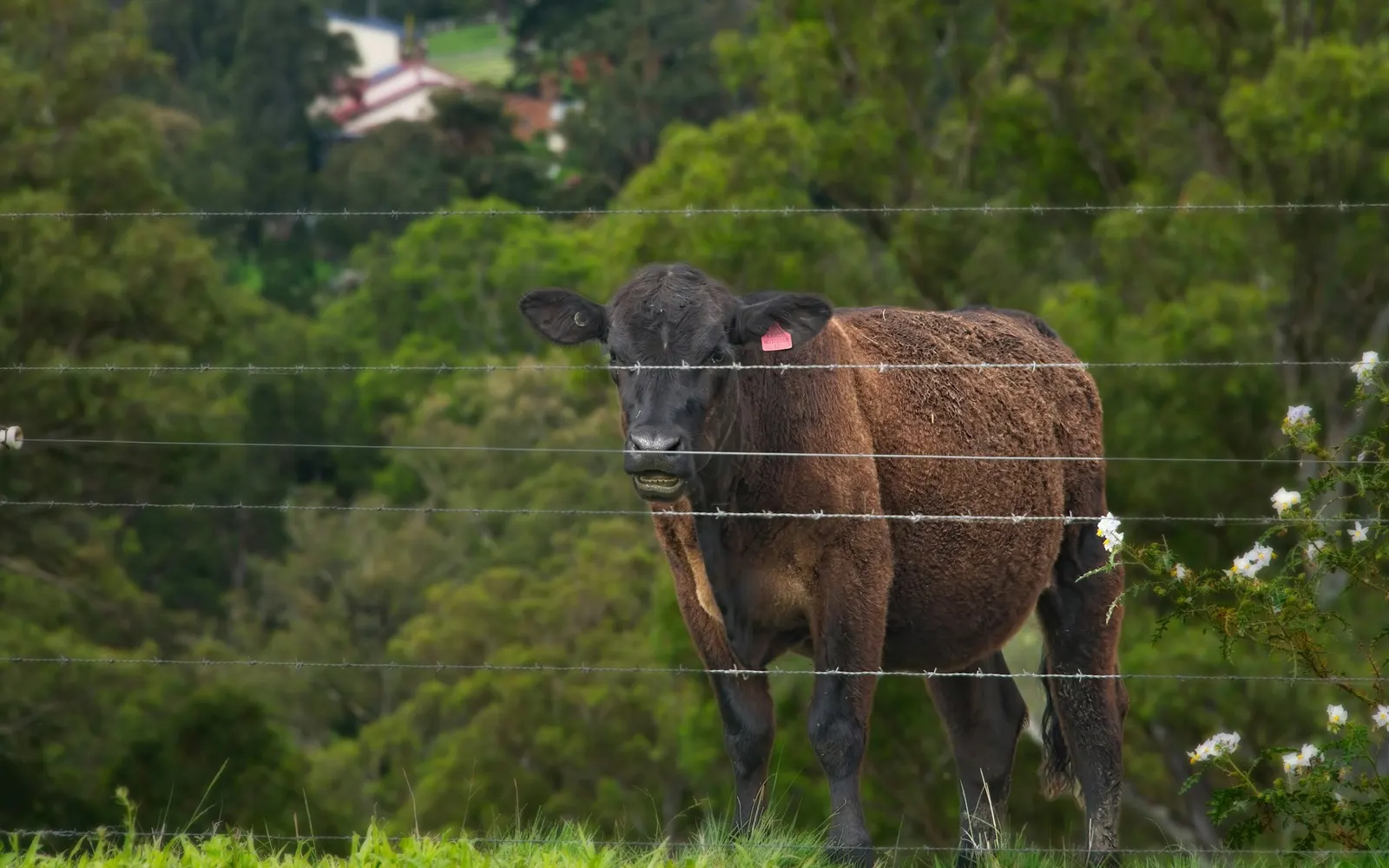
Livestock theft is common enough that 44 per cent of farmers who answered the NSW Farm Crime Survey had experienced it, and NSW Police figures show an average of 1,800 cattle and 16,700 sheep stolen in the state each year from 2015 to 2020 (Mulrooney and Harkness 2022). Recorded stock theft incidents in NSW have fallen, from 927 in 2003 to 233 in 2025 (BOCSAR 2026), but many thefts are never reported. In the UK, livestock theft cost an estimated £4.5m in 2025, up nearly 30 per cent (NFU 2026). Police advice is simple: count stock regularly, keep identification and records, lock gates, and report losses quickly.
How common is cattle theft in Australia?
The best long-run figure is the number of stock theft incidents recorded by NSW Police, published by the NSW Bureau of Crime Statistics and Research (BOCSAR). These numbers count incidents (reported crimes), not the number of animals taken.
| Year | Recorded stock theft incidents |
|---|---|
| 1995 | 888 |
| 2003 | 927 |
| 2011 | 706 |
| 2015 | 479 |
| 2020 | 396 |
| 2022 | 257 |
| 2024 | 217 |
| 2025 | 233 |
Source: BOCSAR (2026), recorded criminal incidents by month, all of NSW, offence "Stock theft".
Fewer reports does not necessarily mean fewer thefts. In the NSW Farm Crime Survey, 80 per cent of farmers said they had been a victim of farm crime in their lifetime, and 44 per cent of respondents had experienced livestock theft (Mulrooney and Harkness 2022). The same researchers, citing NSW Police Force figures, say an average of 1,800 cattle and 16,700 sheep were stolen each year across NSW between 2015 and 2020, "at a cost of nearly $4 million (annually) to farmers". Adding stud value, lost wool or milk, and lost future breeding, they estimate the yearly cost "could realistically be over $60 million" (Mulrooney and Harkness 2022).
National survey figures are older. In the Australian Institute of Criminology's 2001 to 2002 National Farm Crime Survey, livestock theft was the most common farm crime, experienced by six per cent of Australian farms, and the cost to the industry was estimated at $72 million in 2001 to 2002 (McCall and Homel 2003).
Why does so much stock theft go unreported?
Farm crime researchers talk about a "dark figure": crime that happens but never reaches police records. The reasons farmers give for not reporting livestock theft include (Mulrooney and Harkness 2022):
- discovering the theft too late, with no idea when it happened;
- a lack of evidence or proof that stock were stolen;
- a lack of confidence that police can solve it.
Big, remote properties make this worse, because they "often limit the regularity with which farmers check their livestock", and the time it takes a farmer to notice stolen stock "can range from days to months" (Mulrooney and Harkness 2022). Earlier Australian research found that even when theft is reported, it is often after a long delay, and that 11 per cent of stolen livestock in the national survey were not identified in any form, which makes proving ownership hard (McCall and Homel 2003).
How common is livestock theft in the UK?
The main UK figure comes from the farm insurer NFU Mutual and is based on its claims statistics. Its 2026 Rural Crime Report estimates that rural crime cost the UK £41.5 million in 2025, down from £44.1m in 2024, but livestock theft rose "nearly 30% to £4.5m" (NFU 2026; NFU Mutual 2026). NFU Mutual said livestock theft had become "highly organised, in line with the wider trend in rural crime" (NFU 2026). In August 2025, the NFU reported an earlier NFU Mutual estimate that livestock theft cost £3.4m in 2024 (NFU 2025).
Sheep are the main target. The National Farmers' Union, quoting National Rural Crime Unit figures, says sheep and lambs were "around 70% of all livestock stolen in 2024", with fat and store lambs most at risk because they can be sold quickly through markets or abattoirs (NFU 2025).
What about cattle theft in the United States?
In the western US, state brand boards check who owns cattle before they are sold or moved. South Dakota's Brand Board inspected 1,615,013 head in 2024. That year, 610 head of livestock (278 cows, 177 calves, 90 yearlings, 13 bulls and 52 horses) were reported missing or stolen, down from 1,166 head in 2023, and 241 head were recorded as found or recovered (South Dakota Brand Board 2025).
The board is careful to say that not every missing animal is stolen: some cases are civil disputes between producers, lenders taking back their security, or animals that died. It also held the sale money for $97,567.12 worth of livestock in 2024 because the sellers had not provided proof of ownership, noting that "without brand inspections, anyone could sell livestock without providing evidence of ownership" (South Dakota Brand Board 2025).
How do you prevent livestock theft?
Police advice in Australia and the UK covers the same few basics: make stock hard to take, easy to identify, and quickly missed.
Make stock hard to take
- Keep fences in good repair, fix damage straight away, and lock gates with good quality locks (Victoria Police 2025a).
- Lock loading ramps and stockyards at remote spots, and avoid holding stock unsupervised near roads (Victoria Police 2025a).
- Use an alarm on an electric fence that sounds in the house if the fence is cut (SAPOL n.d.).
- In the UK, padlock gates, reverse the gate pins so gates cannot be lifted off, make it hard for trailers to reach or turn near gateways, and graze sheep away from roads where possible (NFU 2025).
- Install CCTV covering entry and exit points, and sensor lights around buildings (Victoria Police 2025a).
Make stock easy to identify
- Tag all livestock and photograph your animals, or at least the most valuable ones, with ear tags or brands visible (NFU Mutual 2022).
- Make sure stock are NLIS tagged before transport, link all properties to your Property Identification Code (PIC), and only use carriers you know or your stock agent recommends (Victoria Police 2025a).
- Keep proof of ownership and records of all sales, births and deaths, and give neighbours a copy of your brand (SAPOL n.d.).
- Freeze branding cattle and clear flock marks on sheep make it harder for thieves to pass animals off as their own (NFU 2025).
For more on tags and identification rules, see our guide to cattle ear tags and NLIS.
Make losses quickly noticed
- "Count your livestock regularly", name or number paddocks, and keep records of which stock are where (Victoria Police 2025a).
- Check livestock regularly, "particularly around sale days" (SAPOL n.d.).
- Check stock regularly and at varied times of day, so would-be thieves worry about being caught (NFU 2025).
- Consider police checks when hiring, as "some thefts may be internal" (SAPOL n.d.).
A count is only useful if it is accurate and written down with a date. Our guide on how to count cattle covers gate counts, race counts and tallies.
Do GPS ear tags help recover stolen cattle?
There is early evidence. In a trial reported in 2022 by the University of New England, run with NSW Police, researchers staged a mock theft of 20 sheep fitted with Ceres Tag smart tags, which for the trial were worn on collars rather than in the ear (Mulrooney and Harkness 2022). The tags sent a "high activity alert" within 12 minutes, police tracked and interrupted the theft within 25 minutes, did so three times over 110 km and 90 minutes, and recovered the stock within 20 minutes of the thieves reaching their destination (Mulrooney and Harkness 2023). This was a single staged trial funded by the tag maker, so it shows what is possible rather than how often it works on real farms (Mulrooney and Harkness 2022).
How do you report stolen cattle?
Report quickly. Victoria Police says to "report any unexpected losses immediately", not to confront a thief, and to take photos and notes of what you can see (Victoria Police 2025a). The sooner it is reported, "the greater chance police have of identifying the offender" (Victoria Police 2025b).
- NSW: contact your local police, who have a state-wide network of Rural Crime Investigators, or Crime Stoppers on 1800 333 000. NSW Police publish a Stock Theft Report template that lists what they need (NSW Police n.d.).
- Victoria: call Triple Zero (000) if the theft is happening now; otherwise report online, call the Police Assistance Line on 131 444, or contact Crime Stoppers on 1800 333 000 (Victoria Police 2025a).
- England and Wales: keepers must report lost or stolen cattle to the police and the British Cattle Movement Service, and post the cattle passport to BCMS within 7 days (BCMS and RPA 2022).
- South Dakota, US: contact local law enforcement immediately; the Brand Board's investigators assist them (South Dakota Brand Board 2025).
Police will ask for detail. The NSW template asks for the paddock the stock were taken from, the date the theft was noticed, the date stock were last counted and by whom (with count records attached), NLIS and management tag numbers, a sketch of the brand or earmark, photos, and the names of everyone with access to the property (NSW Police 2018). In the UK, police are very likely to ask for tag or passport numbers, and the sooner they have them, the sooner they can alert local auctions and abattoirs (NFU 2025).
Is it theft, or are the cattle just lost?
Before assuming theft, rule out the obvious: a broken fence, a neighbour's paddock, the council pound, or deaths. Our guide on how to find lost cattle takes you through what to check and in what order. If you find a cut fence, tyre marks or a whole group gone at once, report it to police as a possible theft, even if you are not sure. Even unsolved reports help: the NFU notes that information from farmers helps police link crimes together and build intelligence (NFU 2025).
Common questions
How common is cattle theft in Australia?
In the NSW Farm Crime Survey, 44 per cent of responding farmers had experienced livestock theft. NSW Police figures show an average of 1,800 cattle and 16,700 sheep stolen each year from 2015 to 2020. NSW Police recorded 233 stock theft incidents in 2025. Nationally, livestock theft was the most common farm crime in the 2001 to 2002 National Farm Crime Survey, affecting six per cent of farms.
Is livestock theft increasing?
It depends where. Recorded stock theft incidents in NSW fell from 927 in 2003 to 233 in 2025, but researchers say much theft is never reported. In the UK, NFU Mutual estimates livestock theft rose nearly 30 per cent to £4.5m in 2025, while total rural crime fell to £41.5m. In South Dakota, head reported missing or stolen fell from 1,166 in 2023 to 610 in 2024.
How do you prevent livestock theft?
Police advice covers three things. Make stock hard to take: repair fences, lock gates and loading ramps, and avoid holding stock unsupervised near roads. Make stock easy to identify: tag all animals, photograph brands and tags, and keep records of sales, births and deaths. Make losses quickly noticed: count your livestock regularly, check them around sale days, and record which stock are in which paddock.
What should I do if my cattle are stolen?
Report it to police as soon as possible and do not confront a thief. In NSW contact local police or Crime Stoppers on 1800 333 000; in Victoria call 000 if it is happening now, otherwise 131 444. In England and Wales, also tell BCMS and send the passport within 7 days. Have tag numbers, brand details, photos and the date stock were last counted ready.
How much does livestock theft cost in the UK?
NFU Mutual's 2026 Rural Crime Report, based on its claims, estimates livestock theft cost the UK £4.5m in 2025, up nearly 30 per cent on the year before. The insurer says livestock theft has become highly organised. National Rural Crime Unit figures quoted by the NFU say sheep and lambs were around 70 per cent of livestock stolen in 2024.
How many sheep are stolen in NSW each year?
NSW Police Force figures, cited by University of New England researchers, show an average of 16,700 sheep and 1,800 cattle stolen each year across NSW between 2015 and 2020, at a cost of nearly $4 million a year. Because many farmers do not report theft, the researchers say these figures are conservative.
References
- BCMS and RPA (2022) 'Report lost or stolen cattle', GOV.UK, British Cattle Movement Service and Rural Payments Agency. Available at: https://www.gov.uk/guidance/report-lost-or-stolen-cattle (Accessed: 17 October 2026).
- BOCSAR (2026) 'Recorded Criminal Incidents by month: All of NSW' (dataset, Incident_by_NSW.xlsx, data to June 2026), NSW Bureau of Crime Statistics and Research. Available at: https://bocsar.nsw.gov.au/statistics-dashboards/open-datasets/criminal-offences-data.html (Accessed: 17 October 2026).
- McCall, M. and Homel, P. (2003) 'Preventing crime on Australian farms: issues, current initiatives and future directions', Trends & Issues in Crime and Criminal Justice, no. 268. Canberra: Australian Institute of Criminology. Available at: https://www.aic.gov.au/sites/default/files/2020-05/tandi268.pdf (Accessed: 17 October 2026).
- Mulrooney, K. and Harkness, A. (2022) Ceres Tag: An Evaluation for the Prevention, Interruption and Reduction of Livestock Theft. Final report. Centre for Rural Criminology, University of New England. Available at: https://blog.une.edu.au/hasse/files/2022/09/Ceres-Tag-An-Evaluation-for-the-Prevention-Interruption-and-Reduction-of-Livestock-Theft.pdf (Accessed: 17 October 2026).
- Mulrooney, K. and Harkness, A. (2023) 'Farm crime and security: evaluating smart tag technology for preventing, tracking and recovering stolen livestock', International Journal of Rural Criminology, 8(1), pp. 107 to 123. Available at: https://doi.org/10.18061/ijrc.v8i1.9619 (Accessed: 17 October 2026).
- NFU (2025) 'Reducing the risk of livestock theft', National Farmers' Union, 28 August. Available at: https://www.nfuonline.com/news/steps-to-deter-livestock-theft/ (Accessed: 17 October 2026).
- NFU (2026) 'Cost of rural crime falls, but worrying increases across farming kit and livestock theft', National Farmers' Union, 28 May. Available at: https://www.nfuonline.com/news/nfu-mutual-rural-crime-report/ (Accessed: 17 October 2026).
- NFU Mutual (2022) 'How to improve farm security', NFU Mutual. Available at: https://www.nfumutual.co.uk/news-and-stories/how-to-improve-farm-security/ (Accessed: 17 October 2026).
- NFU Mutual (2026) 'Rural Crime Report 2026', NFU Mutual. Available at: https://www.nfumutual.co.uk/farming/rural-crime/ (Accessed: 17 October 2026).
- NSW Police (2018) 'Stock Theft Report' (template), NSW Police Force. Available at: https://www.police.nsw.gov.au/__data/assets/pdf_file/0004/458617/Stock_Theft_Report_template.pdf (Accessed: 17 October 2026).
- NSW Police (n.d.) 'Rural crime', NSW Police Force. Available at: https://www.police.nsw.gov.au/safety_and_prevention/crime_prevention/rural_crime (Accessed: 17 October 2026).
- SAPOL (n.d.) 'Livestock and grain theft', South Australia Police. Available at: https://www.police.sa.gov.au/__data/assets/pdf_file/0009/890082/Livestock-and-Grain-Theft.pdf (Accessed: 17 October 2026).
- South Dakota Brand Board (2025) Annual Report to Senate and House Committees, 2025 Legislature: Brand Board Legislative Report for Calendar Year 2024. Pierre: South Dakota Legislature. Available at: https://mylrc.sdlegislature.gov/api/Documents/Required%20Report/283323.pdf (Accessed: 17 October 2026).
- Victoria Police (2025a) 'Livestock and stockyard security', Victoria Police. Available at: https://www.police.vic.gov.au/livestock-stockyard-security (Accessed: 17 October 2026).
- Victoria Police (2025b) 'Report a farm crime or suspicious activity', Victoria Police. Available at: https://www.police.vic.gov.au/report-farm-crime-or-suspicious-activity (Accessed: 17 October 2026).