
Sheep tag age colours: the year of birth colour chart, eID dates and which ear
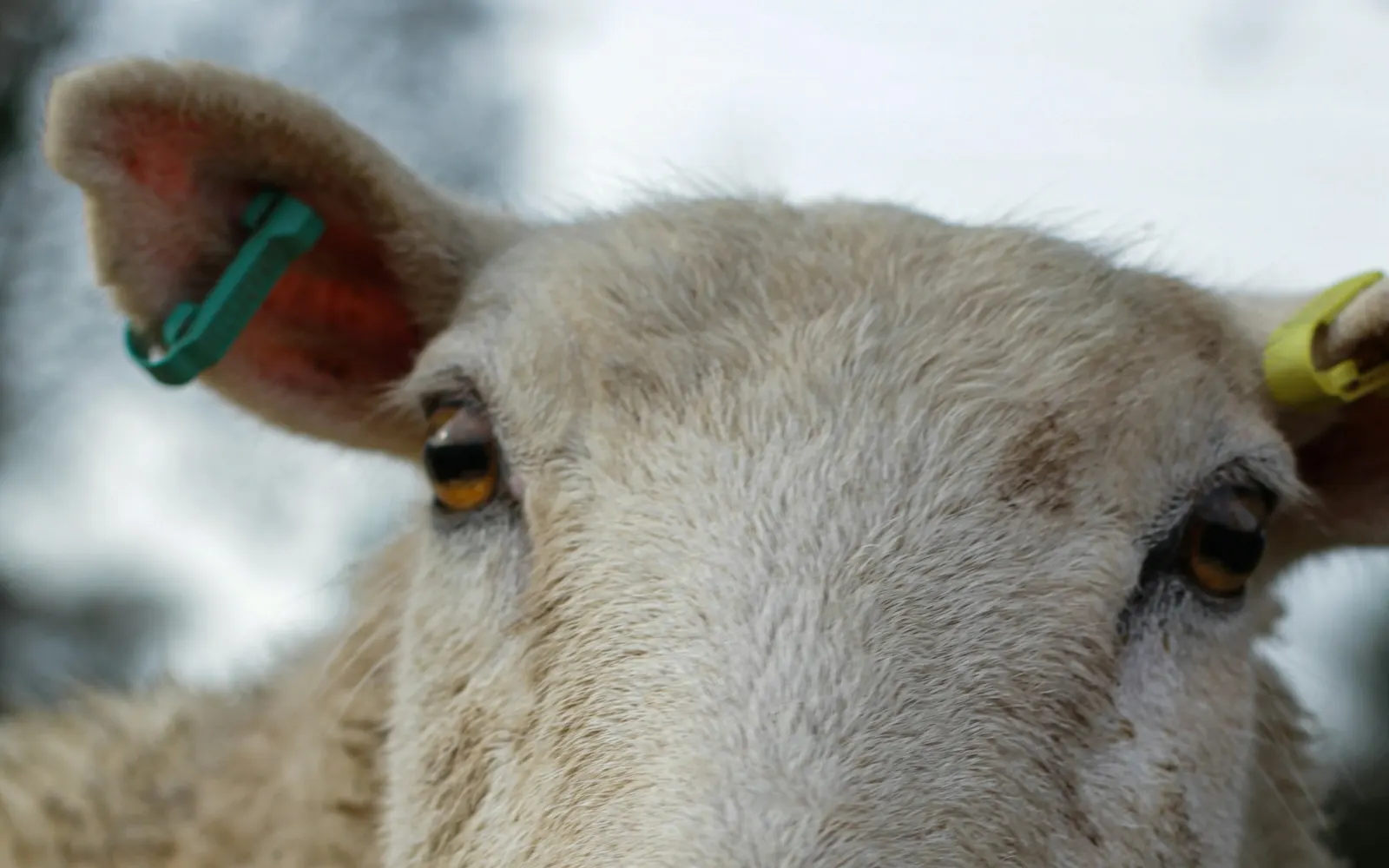
In Australia, sheep and goat breeder tags follow an eight-colour year of birth cycle: yellow for 2021 and 2029, red for 2022 and 2030, sky blue for 2023 and 2031, black for 2024 and 2032, white for 2025 and 2033, orange for 2026 and 2034, light green for 2027 and 2035, and purple for 2028 and 2036 (Integrity Systems Company n.d.b). Replacement (post-breeder) tags are always pink. The colours are mandatory in Western Australia and recommended in the other states and territories, and from 1 January 2027 every sheep and farmed goat leaving a property must carry an electronic NLIS tag (Integrity Systems Company n.d.a).
What are sheep tag age colours?
Australia identifies sheep and goats through the National Livestock Identification System (NLIS), the national system for identifying and tracing livestock. Every tag used in it must be an NLIS approved device, and approved devices carry the NLIS logo (Integrity Systems Company n.d.a).
The first tag an animal gets, on the property where it was born, is called a breeder device. For sheep and goats it is either yellow or the colour for the animal's year of birth. A tag put in later, after the animal has left its property of birth, is called a post-breeder device, and for sheep and goats it is pink (Integrity Systems Company n.d.a).
The point of a year of birth colour is simple: you can tell roughly how old a sheep is from across the yard, without catching it and reading the number. That helps when you are drafting off older ewes or checking which drop (the lambs born in one season) a mob came from.
Sheep and goat tag colours by year
Integrity Systems Company, which runs the NLIS, publishes the colour for each year. Its device standard lists 2013 to 2028, and its current eID page lists 2021 to 2036. The two agree for the years they share.
| Colour | Years |
|---|---|
| Yellow | 2013, 2021, 2029 |
| Red | 2014, 2022, 2030 |
| Sky blue | 2015, 2023, 2031 |
| Black | 2016, 2024, 2032 |
| White | 2017, 2025, 2033 |
| Orange | 2018, 2026, 2034 |
| Light green | 2019, 2027, 2035 |
| Purple | 2020, 2028, 2036 |
| Pink | Any year: post-breeder tags must be pink |
Because the list runs in a fixed order of eight colours, the same colour comes back every eight years (our reading of the table). A white tag could mean a 2017 or a 2025 drop, so the colour tells you the age only if you also know roughly how old the animal is. The printed NLIS ID helps less than you might think: it includes the year the device was made, which is not always the year the animal was born (Integrity Systems Company n.d.b).
The colour is only a guide in states where it is optional. The NLIS device standard notes that "in most jurisdictions, the use of the Year of Birth Colour System is voluntary" (Integrity Systems Company 2024). A breeder can legally use plain yellow breeder tags instead in those states.
Are year of birth colours compulsory?
Only in Western Australia. Integrity Systems states that year of birth colours "are mandatory in WA and recommended in other states/territories" (Integrity Systems Company n.d.b).
WA's Department of Primary Industries and Regional Development (DPIRD) says the state "will continue to follow the year-of-birth colour system for eIDs", and that the year of birth colour eID must go in before the animal reaches 6 months of age or before it leaves its property of birth, whichever comes first. After 1 July 2026, yellow eIDs can be used for WA stock born before 1 January 2025 when they leave their property of birth (DPIRD WA n.d.).
When did sheep and goat eID become mandatory in each state?
An eID (electronic identification) tag has a microchip inside that a reader or wand scans by radio, so each animal can be recorded individually. In September 2022, federal and state agriculture ministers agreed to bring in a nationally consistent eID system for sheep and goats (Integrity Systems Company n.d.c).
The rollout has two stages. First, animals born on or after 1 January 2025 need an eID before leaving their property of birth. Second, all sheep and goats need one before leaving any property, whatever their age. Visual (non-electronic) tags are no longer accepted for sheep and farmed goats born after 1 January 2025 (Integrity Systems Company n.d.c). The dates below come from the national implementation plan, last updated May 2025 (DAFF 2025).
| State or territory | Animals born on or after this date need eID before leaving their property of birth | All sheep and goats need eID before leaving a property |
|---|---|---|
| Victoria | 1 January 2017 | 1 January 2022 |
| New South Wales | 1 January 2025 | 1 January 2027 |
| Queensland | 1 January 2025 | 1 January 2027 |
| South Australia | 1 January 2025 | 1 January 2027 |
| Tasmania | 1 January 2025 | 1 January 2027 |
| Australian Capital Territory | 1 January 2025 | 1 January 2027 |
| Western Australia | 1 January 2025 (within six months of birth or before leaving, whichever is earlier) | 1 July 2026 |
| Northern Territory | 1 January 2025 | Listed under 1 January 2025 |
Victoria went first. Its implementation "was completed in January 2022" (DAFF 2025). The Northern Territory lists both stages under 1 January 2025 and said it would use the first 12 months as an education period (DAFF 2025). Integrity Systems sums up the national position: from 1 January 2027, all sheep and managed goats must carry a species-specific NLIS approved eID before leaving a property (Integrity Systems Company n.d.a). Species-specific means a goat gets a goat device and a sheep a sheep device.
There is one notable exception. Harvested rangeland goats (goats mustered from the wild) can move without an NLIS device to one registered goat depot or direct to slaughter, if the producer holds the right accreditation and uses the rangeland goat movement document (Integrity Systems Company n.d.a). Check your own case with your state's NLIS authority.
Which ear do sheep tags go in?
Integrity Systems puts it plainly: "Cattle tags go in the right ear; sheep tags usually go in the left ear" (Integrity Systems Company n.d.a). The word "usually" matters, because states can set their own rules.
Western Australia is the clearest example. Where visual NLIS tags are still used on the property of birth, DPIRD says the tag "should be placed in the right ear for females and left ear for males". WA's optional registered earmark (two shaped notches cut into the ear) works the other way round: left ear for females, right ear for males (DPIRD WA n.d.). Always follow the tag maker's instructions when applying a device (Integrity Systems Company n.d.a).
For how cattle tags compare, see our guide to cattle ear tags and NLIS rules.
What if a sheep loses its tag?
Use a pink post-breeder device. Integrity Systems says these go on sheep or goats no longer on their property of birth, or on introduced animals that have lost their original device. If the animal still has a visual NLIS tag from its property of birth, leave that tag in and add the pink post-breeder eID as well. The rule to remember: "Only ever apply one eID to one animal" (Integrity Systems Company n.d.b).
In WA, pink post-breeder eIDs are needed only when the original breeder eID is missing or damaged, or when stock leaving your property from 1 July 2026 did not originate there (DPIRD WA n.d.).
What do you need to record when sheep move?
Every time stock leave a property identification code (PIC, the code that identifies a farm), the movement must be recorded on the NLIS database within 2 days, even when the stock move between PICs you own (Integrity Systems Company n.d.d). You can enter either the RFID number read by a wand or the NLIS ID printed on the tag, but only one number per animal. When a mob has a mix of eID and visual tags, the head count can be higher than the number of tags entered, because only animals born on or after 1 January 2025 must have an eID (Integrity Systems Company n.d.d).
It pays to keep your own list of which tag went on which animal; Integrity Systems calls this good practice (Integrity Systems Company n.d.a). Our guide to livestock record keeping covers what else to write down.
Sheep tagging rules in the UK
In England, the rules are set by Defra and the Rural Payments Agency, and Scotland, Wales and Northern Ireland have their own guidance (Defra and RPA 2026). The England guidance does not set a year of birth colour cycle. Instead, colours mark the type of tag:
- When to tag: lambs must be tagged on the holding where they were born, within 6 months of birth if reared indoors, within 9 months if reared outdoors, or before they leave the holding if sooner.
- Slaughter tag: a single yellow EID tag, for lambs intended for slaughter before 12 months old. A lamb kept past 12 months needs 2 adult tags before it reaches that age.
- Adult tags: a pair showing "UK", a 6 digit flock mark and a 5 digit individual number. A common combination is a yellow EID ear tag plus a visual ear tag of any colour except yellow, red or black.
- Your own tags: management tags cannot be yellow, black or red, or carry the letters "UK". You can add the year of birth to an official tag as management information if it is clearly separate from the official number.
- Replacements: lost or damaged tags must be replaced within 28 days of noticing, and a replacement with a new number must be red if the animal was not born on the holding. Update the holding register within 36 hours.
(All from Defra and RPA 2026.) Goats in England follow similar timing, but goat keepers may use two visual tags instead of an EID tag in some combinations (Defra and RPA 2014). The UK guidance does not say which ear a tag goes in.
How tag colours help when you count a mob
Tag colours are handy when you tally a mob through a gate: you can count each drop as it passes. Our guide on how to count sheep covers gate counts and tally methods. For anything that must be exact, such as an NLIS transfer, the scanned or typed tag numbers are the record.
Common questions
What colour are sheep tags for 2026?
Orange. Under the NLIS year of birth colour system used for sheep and goats in Australia, 2026 is orange and 2027 is light green. The same colours come round every eight years, so orange was also used for 2018 and will be used again for 2034. Replacement post-breeder tags are pink whatever the year.
Which ear do sheep tags go in?
Integrity Systems Company, which runs the NLIS, says sheep tags usually go in the left ear and cattle tags in the right. States can differ: Western Australia says visual NLIS tags on the property of birth go in the right ear for females and the left ear for males. Always follow the tag maker's instructions.
Are sheep year of birth tag colours compulsory?
Only in Western Australia. Integrity Systems says year of birth colours are mandatory in WA and recommended in the other states and territories, and the NLIS device standard notes the system is voluntary in most jurisdictions. Elsewhere a breeder can use plain yellow breeder tags instead.
When do all sheep need eID tags in Australia?
Sheep and farmed goats born on or after 1 January 2025 need an eID before leaving their property of birth. In NSW, Queensland, South Australia, Tasmania and the ACT, all sheep and goats need one before leaving a property from 1 January 2027. Victoria reached that point in 2022 and Western Australia on 1 July 2026.
What are the sheep tagging rules in the UK?
In England, lambs must be tagged within 6 months of birth if reared indoors or 9 months if outdoors, or before leaving the holding. Lambs for slaughter before 12 months can have one yellow EID slaughter tag; others need a pair of adult tags. Your own management tags cannot be yellow, black or red.
References
- DAFF (2025) 'Sheep and goat eID National Implementation Plan', Department of Agriculture, Fisheries and Forestry. Available at: https://www.agriculture.gov.au/biosecurity-trade/policy/partnerships/nbc/sheep-and-goat-traceability-task-force/implementation-plan (Accessed: 17 October 2026).
- Defra and RPA (2014) 'Tag goats with ear tags, pastern bands and boluses', GOV.UK, Department for Environment, Food and Rural Affairs and Rural Payments Agency. Available at: https://www.gov.uk/guidance/tag-goats-with-ear-tags-pastern-bands-and-boluses (Accessed: 17 October 2026).
- Defra and RPA (2026) 'Tag sheep with ear tags, pastern bands and boluses', GOV.UK, Department for Environment, Food and Rural Affairs and Rural Payments Agency. Available at: https://www.gov.uk/guidance/tag-sheep-with-ear-tags-pastern-bands-and-boluses (Accessed: 17 October 2026).
- DPIRD WA (n.d.) 'Livestock identification and movement of sheep and goats', Department of Primary Industries and Regional Development, Western Australia. Available at: https://www.dpird.wa.gov.au/businesses/biosecurity/animal-biosecurity/livestock-ownership-identification-movement/livestock-identification-movement-sheep-goats/ (Accessed: 17 October 2026).
- Integrity Systems Company (2024) 'Requirements for NLIS Animal Identification Technology', Version 1.1, June 2024, Integrity Systems Company Limited. Available at: https://www.integritysystems.com.au/siteassets/nlis-ait-requirements.pdf (Accessed: 17 October 2026).
- Integrity Systems Company (n.d.a) 'Animal Identification', Integrity Systems. Available at: https://www.integritysystems.com.au/identification--traceability/animal-identification/ (Accessed: 17 October 2026).
- Integrity Systems Company (n.d.b) 'Ordering eID devices', Sheep and Goat eID, Integrity Systems. Available at: https://www.integritysystems.com.au/identification--traceability/national-livestock-identification-system/Sheep-and-Goat-eID/Ordering-eID-devices/ (Accessed: 17 October 2026).
- Integrity Systems Company (n.d.c) 'What is Sheep and Goat electronic identification', Integrity Systems. Available at: https://www.integritysystems.com.au/identification--traceability/national-livestock-identification-system/Sheep-and-Goat-eID/What-is-Sheep-and-Goat-eID/ (Accessed: 17 October 2026).
- Integrity Systems Company (n.d.d) 'Meeting NLIS requirements', Sheep and Goat eID, Integrity Systems. Available at: https://www.integritysystems.com.au/identification--traceability/national-livestock-identification-system/Sheep-and-Goat-eID/meeting-nlis-requirements/ (Accessed: 17 October 2026).