
Stocking rate vs stocking density: meaning, formula and carrying capacity
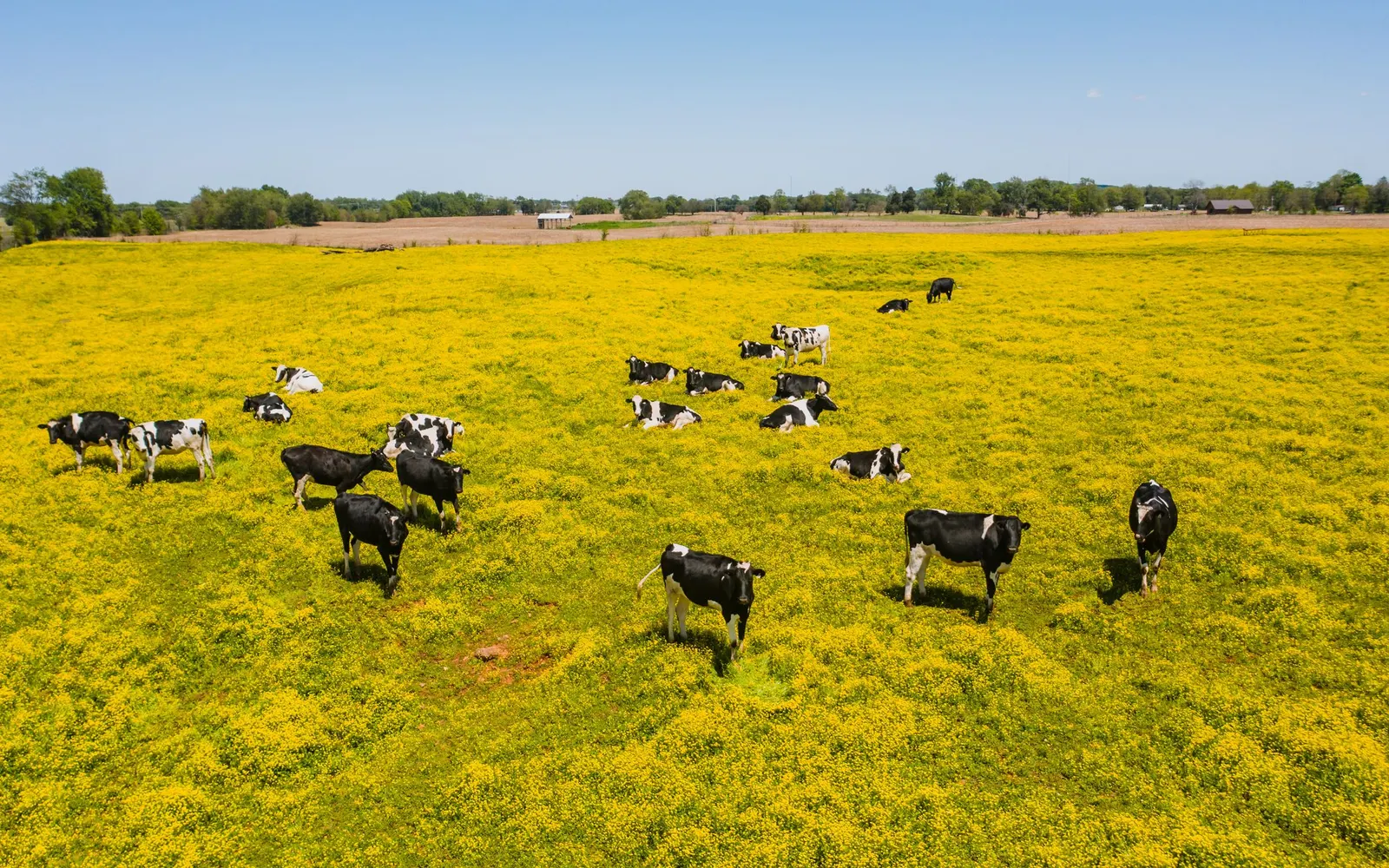
Stocking rate is the number of animals grazed on a whole farm or area over a set period, while stocking density is the number of animals on one paddock at one moment (Morgan et al. 2024). A stocking rate always has three parts, an animal unit, an area and a length of time, but stocking density has no time in it (Stam, Scasta and Thacker 2018). Carrying capacity is the stocking rate the land can keep up over time (Bidwell and Redfearn 2017).
What does stocking rate mean?
Stocking rate is "the number of animals on a given amount of land over a certain period of time", usually given as animal units per unit of land (Bidwell and Redfearn 2017). Think of it as your average grazing pressure across the whole farm for the season or year.
A University of Wyoming guide says every stocking rate must have three parts: "(1) some form of an animal unit, (2) a unit of land area, and (3) a unit of time" (Stam, Scasta and Thacker 2018). Leave out the time and you are no longer talking about a stocking rate.
The animal unit changes from country to country, which is why stocking rates look so different around the world:
- United States and Canada: the animal unit (AU) is a 1,000 lb cow with her calf eating 26 lb of dry forage a day (Bidwell and Redfearn 2017). Rates are often given as acres per AU or AUMs per acre (Stam, Scasta and Thacker 2018).
- Southern Australia: the dry sheep equivalent (DSE). In NSW, 1 DSE is a 50 kg Merino wether or dry ewe holding its condition (Meat & Livestock Australia n.d.). See our dry sheep equivalent guide.
- Northern Australia: hectares per adult equivalent (ha/AE) or AE per square kilometre, where 1 AE is a 450 kg steer (Meat & Livestock Australia 2021).
- Ireland and the UK: livestock units (LU) per hectare. Irish dairy farms averaged 2.07 LU per hectare in 2024 (Dillon et al. 2025). Scottish scheme guidance counts cattle over two years as 1.0 LU, cattle from six months to two years as 0.6, calves under six months as 0.4 and sheep as 0.15 (Scottish Government 2025).
- New Zealand: stock units (SU) per hectare, based on a ewe rearing a lamb (Crawford 2023).
What is stocking density?
Stocking density is "the number of livestock animals in a specific area at a single point in time" (Stam, Scasta and Thacker 2018). If 100 cows are on a 20 acre pasture, the stocking density is 5 cows per acre (Stam, Scasta and Thacker 2018).
The University of Georgia gives the clearest example. A 60 acre farm runs 15 cows in one paddock (continuous stocking). Its stocking rate is 4 acres per cow, and because there is only one paddock, its stocking density is also 4 acres per cow. Now split the farm into four 15 acre paddocks and move the cows around them. There are 15 cows on 15 acres at any one time, so the density is 1 cow per acre, but the stocking rate is still 4 acres per cow (Morgan et al. 2024). With continuous stocking, the rate always equals the density.
One trap: not everyone uses the words the same way. Scotland's agri-environment guidance calls total livestock units divided by the eligible hectares a "stocking density" (Scottish Government 2025), which is closer to what US guides call a stocking rate. Always check how a scheme or a rule defines the term.
Stocking rate vs stocking density: what is the difference?
| Term | What it measures | Area | Time | Example unit |
|---|---|---|---|---|
| Stocking rate | Animals you actually run | Whole farm or grazing unit | Yes, a season or year | Acres per AU per year, AUMs per acre |
| Stocking density | Animals in one place right now | One paddock or strip | No, a single point in time | Cows per acre |
| Carrying capacity | The stocking rate the land can sustain | Whole farm or land type | Yes, over the long term | Same units as stocking rate |
MLA's grazing guide sums up the relationship as "Supply = carrying capacity" and "Demand = stocking rate", and warns that because both use the same units, "it is important to be clear which figure you are working with" (Meat & Livestock Australia n.d.).
What is the stocking rate formula?
The simplest version, from the University of Georgia, is land area in acres divided by the number of animal units (Morgan et al. 2024). To work out animal units, divide each animal's live weight by 1,000 lb. For example, 15 dry cows of 1,200 lb are 1.2 animal units each, or 18 in total. On 60 acres, that is 60 divided by 18, or 3.3 acres per animal unit (Morgan et al. 2024).
Oklahoma State adds time to the formula: total land area divided by (number of AUs times grazing season). Its example is 50 cows of 1,000 lb on 200 acres for 12 months, which gives 0.33 acres per animal unit month (AUM), or 4 acres per animal unit year (Bidwell and Redfearn 2017).
For a mixed mob, add up the units of each class first. Scotland's guidance shows how: a 23 hectare parcel with 50 ewes at 0.15 LU, 10 cows at 1.0 LU, 6 heifers aged 26 months at 1.0 LU and 10 calves aged 8 months at 0.6 LU holds 29.5 LU (our arithmetic), which gives 1.28 LU per hectare (Scottish Government 2025).
How do you calculate AUM for cattle?
An AUM is the forage one animal unit eats in a month. The trouble is that guides disagree on its size. Wyoming uses 750 lb of dry forage, based on a cow eating 2.5 percent of her body weight a day (Stam, Scasta and Thacker 2018). Oklahoma State uses 780 lb (Bidwell and Redfearn 2017). Alberta uses about 800 lb, from 26.2 lb a day over 30.5 days (Alberta Agriculture and Forestry 2017). Wyoming's advice is to make sure "all parties agree on the definition of an AUM", especially in grazing leases (Stam, Scasta and Thacker 2018).
Wyoming's worked example: if a 1,500 acre pasture can carry 50 cows of 1,000 lb for 6 months, that is 300 AUMs, or 0.2 AUMs per acre. If the cows weigh 1,400 lb and count as 1.4 animal units each, only about 35 of them fit in the same 300 AUMs (Stam, Scasta and Thacker 2018). Bigger cows mean fewer head on the same grass. To find the AUMs a mob needs, multiply the number of head by their animal unit equivalent and by the months grazed (Stam, Scasta and Thacker 2018).
How do you calculate stocking rate in DSE days?
MLA's More Beef from Pastures program counts feed in DSE days per hectare, which builds time into the number. In its example, "Jess's paddock" holds an estimated 86,100 DSE days of feed. The cattle planned for the next 135 days would need 106,700 DSE days, so the paddock is overstocked by 20,600 DSE days. Divided by 135 days, that is 152 DSE too many, and at 7 DSE per cow, 21 head need to come out (Meat & Livestock Australia n.d.).
What is carrying capacity, and how is it different from stocking rate?
Western Australia's agriculture department puts it in one line: "Carrying capacity is about land capability, while stocking rate is a management decision" (DPIRD WA 2025). Carrying capacity is what the land can sustain. Stocking rate is what you choose to run.
MLA describes two time frames. Long-term carrying capacity is the average number of animals a pasture can support over a 10 to 15 year planning horizon. Short-term carrying capacity covers a set period, such as a week, a month or a season (Meat & Livestock Australia n.d.). WA DPIRD splits it further for the rangelands (DPIRD WA 2025):
- Potential carrying capacity assumes all the land is in good condition, fully watered and grazed all year.
- Current carrying capacity discounts land in fair or poor condition. Fair pastures are two-thirds as productive as good ones, and poor pastures less than half.
- Seasonal carrying capacity is the feed on offer over the next few days or months, set by the manager around key decision dates.
Carrying capacity moves with the weather. In drought years it "can be reduced by as much as 50 percent" (Stam, Scasta and Thacker 2018). That is why Oklahoma State says fine tuning a stocking rate needs long-term forage records, because they take in the swings in rainfall (Bidwell and Redfearn 2017). To see what carrying capacity looks like in real paddocks, our article on how many cattle per acre lists sourced figures for Australia, the US, Ireland, the UK and New Zealand.
Does rotational grazing raise the stocking rate?
Rotational grazing raises stocking density by putting the herd on a smaller area at a time. It can also lift the stocking rate, but only if the extra grass is really there. The University of Georgia says that under rotation, stocking rate and density "should increase over time to be greater than continuous grazing because of improved forage utilization and rest periods" (Morgan et al. 2024).
Oklahoma State shows the effect on rangeland in Payne County. With continuous stocking, cattle harvested 25 percent of the forage grown, which supported 170 cows per 1,000 acres. With rotation lifting harvest efficiency to 35 percent, the same land supported 238 cows (Bidwell and Redfearn 2017).
Getting the overall rate right still matters more than the system. In the Wambiana trial in north Queensland, heavy stocking at twice the long-term carrying capacity had by far the lowest net present value after 12 years and a negative gross margin in 6 of the 12 years. Moderate stocking was as profitable as more complicated strategies such as variable stocking and rotational wet season spelling (O'Reagain and Bushell 2011). Heavy stocking also pushed the pasture from B to C- condition, and it did not recover even after numbers were cut (O'Reagain and Bushell 2011).
What does a high stocking rate mean?
A high stocking rate means more animals per area per season. Up to a point that can lift production per acre, but once it goes past carrying capacity, each animal gains less and the pasture declines. Oklahoma State notes that maximum net return "generally takes place at a moderate stocking rate" (Bidwell and Redfearn 2017). The University of Georgia lists the signs of overgrazing: more soil erosion, more weeds, less of the forage animals prefer, and a need for more bought-in feed (Morgan et al. 2024).
Too low a stocking rate has costs too. Undergrazed pasture is grazed unevenly, animals pick the best plants, and the rest gets mature and less nutritious (Morgan et al. 2024).
How do you set your own stocking rate?
- Know exactly how many animals of each class you run. Our guide on how to count cattle covers gate counts, tallies and photos.
- Convert them to one unit (AU, DSE, AE, LU or SU) using their real weight and stage.
- Estimate the feed or carrying capacity of each paddock, ideally from local records or your state department, Teagasc, or Extension office.
- Divide area by units and months for your stocking rate, and compare it with carrying capacity. Then plan density, the paddock moves, separately.
Common questions
What is the difference between stocking rate and stocking density?
Stocking rate is the number of animals grazed on a whole farm or area over a defined period. Stocking density is the number of animals on one paddock at a single point in time, with no time unit. A 60 acre farm with 15 cows rotated through four 15 acre paddocks has a rate of 4 acres per cow but a density of 1 cow per acre.
What is the stocking rate formula?
Divide the land area by the number of animal units times the grazing season. Oklahoma State's example is 50 cows of 1,000 lb on 200 acres for 12 months, which gives 0.33 acres per animal unit month, or 4 acres per animal unit year. Work out animal units first by dividing live weight by 1,000 lb.
How do you calculate AUM for cattle?
An animal unit month (AUM) is the forage one animal unit, a 1,000 lb cow with calf, eats in a month. Guides differ on its size: Wyoming uses 750 lb, Oklahoma State 780 lb and Alberta about 800 lb of forage. Multiply head by animal unit equivalent by months grazed to get AUMs needed, and agree the definition before signing a lease.
What is carrying capacity?
Carrying capacity is the stocking rate the land can sustain over time. WA DPIRD says it is about land capability, while stocking rate is a management decision. MLA describes long-term carrying capacity as the average a pasture can support over 10 to 15 years. In drought it can fall by as much as 50 percent.
What does a high stocking rate mean?
It means more animals per area over the season. Gain per acre rises up to a point and then falls, and each animal gains less as competition grows. Oklahoma State says maximum net return generally comes at a moderate stocking rate. Overgrazing brings more erosion, more weeds and a need for more bought-in feed.
What is stocking rate in LU/ha?
In Ireland and the UK, stocking rate is often given in livestock units per hectare. Scottish guidance counts cattle over two years as 1.0 LU, cattle six months to two years as 0.6, calves under six months as 0.4 and sheep as 0.15. Teagasc found Irish dairy farms averaged 2.07 LU per hectare in 2024.
References
- Alberta Agriculture and Forestry (2017) 'Using the Animal Unit Month (AUM) effectively', Agdex 420/16-1, Government of Alberta. Available at: https://www1.agriculture.alberta.ca/$department/deptdocs.nsf/all/agdex1201 (Accessed: 17 October 2026).
- Bidwell, T.G. and Redfearn, D.D. (2017) 'Stocking rate: the key to successful livestock production', PSS-2871, Oklahoma Cooperative Extension Service, Oklahoma State University. Available at: https://extension.okstate.edu/fact-sheets/stocking-rate-the-key-to-successful-livestock-production (Accessed: 17 October 2026).
- Crawford, M. (2023) 'Stocking rate definitions and threshold values', memorandum, Otago Regional Council. Available at: https://orc.govt.nz/media/nkyfhcv5/memo-stocking-rate-definitions-and-threshold-values-nov-23.pdf (Accessed: 17 October 2026).
- Dillon, E., Donnellan, T., Moran, B. and Lennon, J. (2025) Teagasc National Farm Survey 2024: final results. Athenry: Teagasc. Available at: https://teagasc.ie/wp-content/uploads/uploads/media/website/publications/2025/NFSReport2024.pdf (Accessed: 17 October 2026).
- DPIRD WA (2025) 'Carrying capacity: definitions for the Western Australian Rangelands', Department of Primary Industries and Regional Development, Western Australia. Available at: https://www.dpird.wa.gov.au/siteassets/documents/soil/carrying-capacity-definititions-rangelands-wa.pdf (Accessed: 17 October 2026).
- Meat & Livestock Australia (2021) 'NB2 glossary', Meat & Livestock Australia. Available at: https://www.mla.com.au/globalassets/mla-corporate/research-and-development/program-areas/livestock-production/nb2-glossary-june21.pdf (Accessed: 17 October 2026).
- Meat & Livestock Australia (n.d.) '4: Determine carrying capacity and stocking rate', More Beef from Pastures: Pastoral, Meat & Livestock Australia. Available at: https://mbfp-pastoral.mla.com.au/managing-your-feedbase/determine-carrying-capacity-and-stocking-rate/ (Accessed: 17 October 2026).
- Morgan, S., Tucker, J.J., Baxter, L. and Burt, J. (2024) 'Understanding stocking rate in pasture systems', Bulletin 1568, University of Georgia Cooperative Extension. Available at: https://fieldreport.caes.uga.edu/publications/B1568/understanding-stocking-rate-in-pasture-systems/ (Accessed: 17 October 2026).
- O'Reagain, P.J. and Bushell, J.J. (2011) The Wambiana grazing trial: key learnings for sustainable and profitable management in a variable environment. Agri-Science Queensland, Department of Employment, Economic Development and Innovation. Available at: https://era.dpi.qld.gov.au/id/eprint/8285/1/The-Wambiana-grazing-trial-key-learnings-November-2011.pdf (Accessed: 17 October 2026).
- O'Reagain, P., Bushell, J. and Holmes, B. (2011) 'Managing for rainfall variability: long-term profitability of different grazing strategies in a northern Australian tropical savanna', Animal Production Science, 51(3), pp. 210 to 224. Available at: https://doi.org/10.1071/AN10106 (Accessed: 17 October 2026).
- Scottish Government (2025) 'Management diaries and advice on calculating stocking densities', Rural Payments and Services. Available at: https://www.ruralpayments.org/topics/all-schemes/agri-environment-climate-scheme/agri-environment-management-diaries/ (Accessed: 17 October 2026).
- Stam, B., Scasta, J.D. and Thacker, E. (2018) 'Animal Unit Month (AUM) concepts and applications for grazing rangelands', B-1320, University of Wyoming Extension. Available at: https://www.wyoextension.org/agpubs/pubs/B-1320_AUMs-for-web.pdf (Accessed: 17 October 2026).