
How many cows are there in the world? Cattle numbers by country
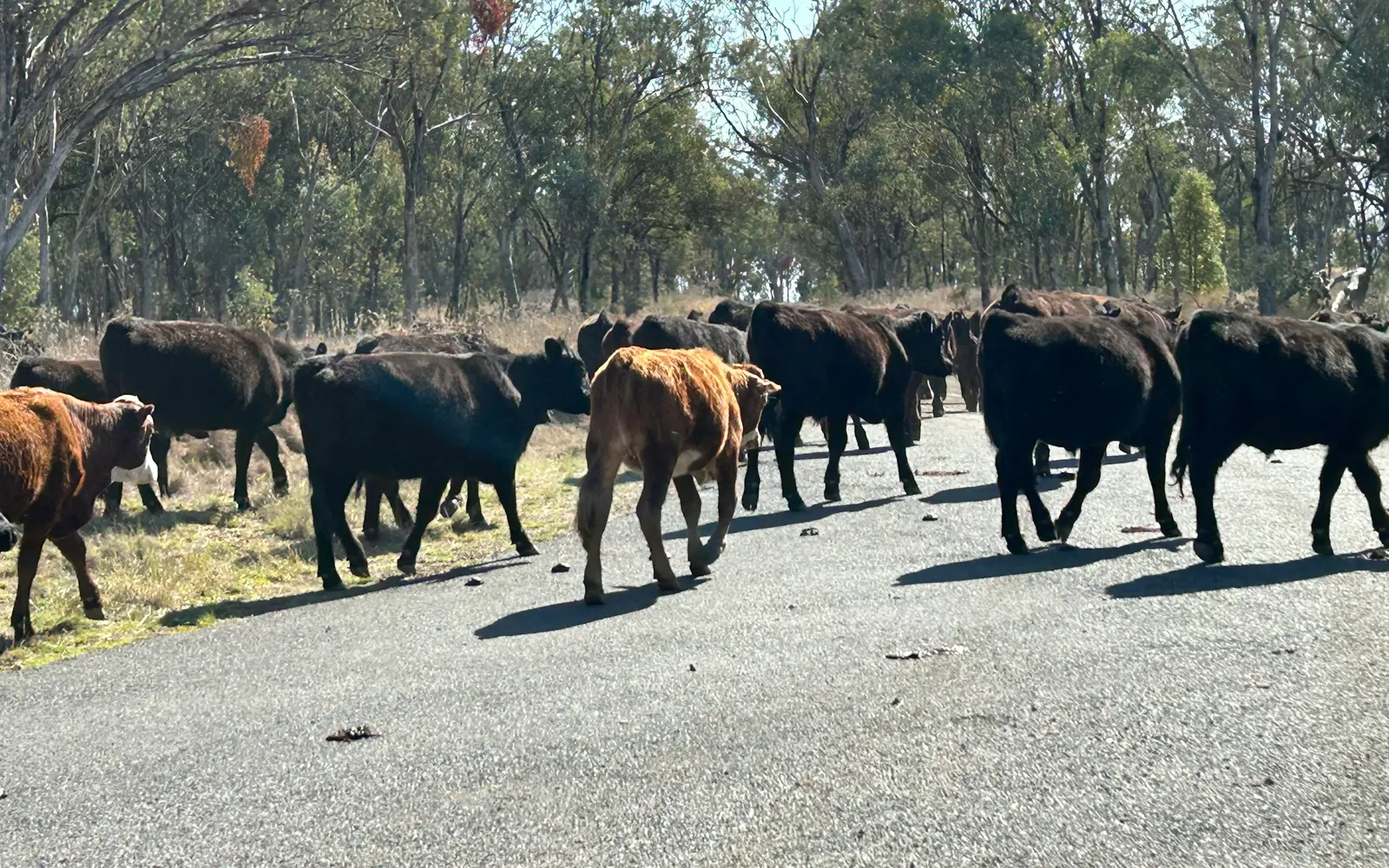
There were about 1.58 billion cattle in the world in 2024, according to the latest FAOSTAT figures from the Food and Agriculture Organization of the United Nations (FAO 2025). Brazil had the most, with about 238 million, followed by India with about 195 million. The United States had 86.2 million cattle and calves on 1 January 2026 (USDA NASS 2026a), and Australia had 29.7 million cattle on 30 June 2025 (ABS 2026).
How many cows are there in the world?
The best worldwide count comes from FAOSTAT, the FAO's statistics database. Its livestock table gives "stocks", meaning the number of live animals in a country in a given year. For 2024, the latest year it holds, FAOSTAT lists 1,578,614,149 cattle worldwide (FAO 2025). Written another way, that is roughly 1.58 billion head (our arithmetic).
Two things are worth knowing about that number. First, FAOSTAT marks the 2024 world total with the flag "E", which stands for "Estimated value". It adds up national figures, and some countries do not send an official count every year, so FAO fills the gaps. Second, buffalo are a separate item. FAOSTAT counts about 212 million buffalo worldwide in 2024, and they are not in the cattle total (FAO 2025).
The world herd has grown a lot over time. FAOSTAT records 942,122,097 cattle in 1961 and 1,439,191,732 in 2014 (FAO 2025). The 2024 figure is about 68% more than in 1961 and about 10% more than in 2014 (our arithmetic).
Compared with people, there is about one head of cattle for every five people on Earth. The FAO's population table, which uses United Nations estimates, puts the 2024 world population at about 8.16 billion (FAO 2026). Dividing 1.58 billion cattle by 8.16 billion people gives about 0.19 cattle per person (our arithmetic).
Is it "cows" or "cattle"?
People search for "how many cows", but the official counts are of cattle. A cow is strictly a female that has had a calf. Cattle also includes heifers (young females that have not calved), steers (castrated males), bulls and calves. Statistics agencies report all of them together, as "head".
The US report shows the difference clearly. Of the 86.2 million cattle and calves on US farms on 1 January 2026, 37.2 million were "cows and heifers that have calved". Of those, 27.6 million were beef cows and 9.57 million were milk cows (USDA NASS 2026a). So fewer than half of America's cattle were cows in the strict sense (our arithmetic). If you want the plain-English difference between a head, a herd and a mob, see what "head of cattle" means.
Which country has the most cattle?
Brazil has the largest cattle herd in the world, followed by India, the United States, Ethiopia and China. The table below lists the ten largest herds in FAOSTAT for 2024, plus Australia, with the flag FAOSTAT gives each number.
| Rank | Country | Cattle (head) | FAOSTAT flag |
|---|---|---|---|
| 1 | Brazil | 238,180,757 | Official figure |
| 2 | India | 194,753,479 | Imputed |
| 3 | United States | 87,157,400 | Official figure |
| 4 | Ethiopia | 71,916,930 | Imputed |
| 5 | China | 70,482,811 | Estimated |
| 6 | Pakistan | 57,541,000 | Official figure |
| 7 | Argentina | 52,783,892 | Official figure |
| 8 | Chad | 39,625,902 | Imputed |
| 9 | Tanzania | 39,053,013 | Imputed |
| 10 | Mexico | 36,933,201 | Imputed |
| 12 | Australia | 30,372,537 | Official figure |
Source: FAO (2025). Ranking is our sort of the FAOSTAT country figures.
Brazil alone holds about 15% of the world's cattle, India about 12%, and the top four (Brazil, India, the US and Ethiopia) about 37.5% together (our arithmetic). Australia sits 12th on this list, with about 2% of the world herd (our arithmetic).
Why India's number needs care
FAOSTAT flags India's 2024 cattle figure as "Value imputed by a receiving agency", which means it was filled in by a statistical method rather than reported as an official count for that year (FAO 2025). India also has about 112 million buffalo in FAOSTAT's 2024 table, more than half the world's buffalo, and those are not counted as cattle (FAO 2025; our arithmetic). Several other big herds in the table, including Ethiopia, Chad and Tanzania, are imputed too, so treat the world ranking as a good guide rather than an exact count.
How many cows are in Australia?
The Australian Bureau of Statistics (ABS) says there were 29.7 million cattle on holdings at 30 June 2025, a decrease of 2.5% from June 2024. That total was 27.6 million beef cattle and 2.1 million dairy cattle (ABS 2026). This is the latest official count; the ABS released it in April 2026.
- Queensland has the most beef cattle, with 13.5 million head, up 0.7% on 2024.
- New South Wales is second, with 5.5 million beef cattle, down 7.1%.
- Victoria has the largest dairy herd, with 1.3 million head.
The ABS says the beef herd fell "following high slaughter rates driven by increased global demand" (ABS 2026). With about 27.6 million people in Australia at 30 June 2025 (ABS 2025), there was roughly one head of cattle for every Australian, about 1.08 per person (our arithmetic).
Meat & Livestock Australia (MLA), the industry's research and marketing body, keeps its own herd estimate. In March 2026 it forecast that the national herd would ease 1% to 30.78 million in 2026, while cattle slaughter would reach 9.45 million head, "the highest result since 1978" (Meat & Livestock Australia 2026). MLA's figure is a projection for 2026, not the ABS count at 30 June 2025, so compare like with like. For how many cattle a paddock can carry, see how many cattle per acre.
How many cows are in America?
The United States Department of Agriculture's National Agricultural Statistics Service (USDA NASS) runs the official count twice a year. Its January report is the main benchmark. On 1 January 2026, all cattle and calves in the US totalled 86.2 million head, slightly below the 86.5 million head on 1 January 2025 (USDA NASS 2026a).
- Beef cows: 27.6 million, down 1%.
- Milk cows: 9.57 million, up 2%.
- Cattle on feed (being fattened in feedlots for slaughter): 13.8 million, down 3%.
- The 2025 calf crop: 32.9 million, down 2%.
Texas has more cattle than any other state, with 12.1 million head on 1 January 2026 (USDA NASS 2026a).
NASS also counts on 1 July. That figure is bigger: 94.2 million head on 1 July 2026, slightly above 94.0 million a year earlier (USDA NASS 2026b). The July count includes calves born since January: NASS estimates 23.9 million calves were born in the first half of 2026 (USDA NASS 2026b). That is a big part of why the herd looks larger in July than in January. When you compare years, compare January with January.
Why do different sources give different numbers?
If you search this topic you will see several totals for the same country. They usually differ for three reasons.
- Different dates. Australia counts at 30 June, the US at 1 January and 1 July, and FAOSTAT gives one figure per calendar year. Herds swing with calving and selling, so the date matters.
- Different methods. NASS surveyed about 35,000 operators in early January 2026 and checks the result against a balance sheet of births, imports, slaughter, exports and deaths (USDA NASS 2026a). The ABS now models the herd from "a number of inputs", with key data sources including abattoir and meat processor records and levy transaction records, "without the need to survey farmers" (ABS 2026).
- Revisions. Agencies update older numbers when better data arrive. The ABS revised Australia's 30 June 2024 total from 30,372,537 to 30,482,300 (ABS 2026). FAOSTAT still shows the earlier 30,372,537 for Australia in 2024 (FAO 2025).
Survey numbers also carry some error. NASS says that, based on the last 10 years, chances are 2 out of 3 that the final US figure will not differ from its first estimate of 86.2 million by more than 0.3% (USDA NASS 2026a).
How is a country's cattle herd counted?
Nobody walks past every animal on the same day. National totals are built from samples, registers and models. In the US, a random sample of producers reports what they had on 1 January, with large operations sampled more heavily (USDA NASS 2026a). In Australia, the ABS models the herd at 30 June from a number of inputs, with key sources including meat processor and levy records (ABS 2026). FAO then gathers these national figures and estimates the gaps for its world total (FAO 2025).
On a single farm the job is the opposite: you count the animals you can see. You can count through a gate or race, or try photos or drones. Our guide on how to count cattle covers each method. Count My Herd is one photo option: it puts a dot on every animal it finds in your paddock photos and gives a range around the count. It is an estimate, not a count through the race. In our first check, 9 small groups of animals (1 to 7 head, one photo each) were all counted exactly; big mobs and sweeps of several photos have not been tested yet.
What about sheep?
The world has fewer sheep than cattle, but not by much: FAOSTAT counts about 1.36 billion sheep in 2024 (FAO 2025). Australia is one of the biggest sheep countries. Read how many sheep are in Australia for the latest flock figures for Australia, New Zealand and the UK, and sheep per person.
Common questions
How many cows are there in the world?
FAOSTAT, the United Nations Food and Agriculture Organization's database, counts 1,578,614,149 cattle worldwide in 2024, its latest year. That is about 1.58 billion head. FAO marks the world total as an estimate, because some countries' figures are filled in by FAO. Buffalo are counted separately, at about 212 million.
Which country has the most cows?
Brazil, with 238,180,757 cattle in 2024 on FAOSTAT figures. India is second with about 195 million, then the United States with about 87 million, Ethiopia with about 72 million and China with about 70 million. India's figure is imputed by a statistical method, so treat the ranking as a guide.
How many cows are in Australia?
The Australian Bureau of Statistics says there were 29.7 million cattle on holdings at 30 June 2025, down 2.5% from a year earlier. That was 27.6 million beef cattle and 2.1 million dairy cattle. Queensland had the most beef cattle, with 13.5 million head. Meat & Livestock Australia's projections forecast 30.78 million head for 2026.
How many cows are in America?
USDA's National Agricultural Statistics Service counted 86.2 million cattle and calves in the United States on 1 January 2026, slightly below 86.5 million a year earlier. Of those, 27.6 million were beef cows and 9.57 million were milk cows. Texas had the most, with 12.1 million head. The July 2026 count was higher, at 94.2 million, because it includes calves born since January.
How many cows are there per person?
Worldwide there are about 0.19 cattle per person, or roughly one for every five people, by our arithmetic from FAOSTAT's 2024 cattle total and its 2024 world population figure of about 8.16 billion. Australia has about 1.08 cattle per person, using ABS herd and population figures for 30 June 2025.
References
- ABS (2025) 'National, state and territory population, June 2025', Australian Bureau of Statistics. Available at: https://www.abs.gov.au/statistics/people/population/national-state-and-territory-population/jun-2025 (Accessed: 17 October 2026).
- ABS (2026) 'Australian Agriculture: Livestock, 2024-25 financial year', Australian Bureau of Statistics. Available at: https://www.abs.gov.au/statistics/industry/agriculture/australian-agriculture-livestock/latest-release (Accessed: 17 October 2026).
- FAO (2025) 'FAOSTAT: Production, crops and livestock products (QCL)', bulk data file updated December 2025, Food and Agriculture Organization of the United Nations. Available at: https://bulks-faostat.fao.org/production/Production_Crops_Livestock_E_All_Data_(Normalized).zip (Accessed: 17 October 2026).
- FAO (2026) 'FAOSTAT: Population and employment, annual population (OA)', data from UN World Population Prospects 2024, bulk data file updated March 2026, Food and Agriculture Organization of the United Nations. Available at: https://bulks-faostat.fao.org/production/Population_E_All_Data_(Normalized).zip (Accessed: 17 October 2026).
- Meat & Livestock Australia (2026) 'Record beef production expected as national herd remains above 30 million in 2026: MLA Cattle Industry Projections 2026', 24 March. Available at: https://www.mla.com.au/news-and-events/industry-news/record-beef-production-expected-as-national-herd-remains-above-30-million-in-2026-mla-cattle-industry-projections-2026/ (Accessed: 17 October 2026).
- USDA NASS (2026a) 'Cattle', released 30 January 2026, National Agricultural Statistics Service, United States Department of Agriculture. Available at: https://www.nass.usda.gov/Publications/Todays_Reports/reports/catl0126.pdf (Accessed: 17 October 2026).
- USDA NASS (2026b) 'Cattle', released 24 July 2026, National Agricultural Statistics Service, United States Department of Agriculture. Available at: https://www.nass.usda.gov/Publications/Todays_Reports/reports/catl0726.pdf (Accessed: 17 October 2026).